Now that we have explored the impact of divination on gambling behaviour from the perspective of historical and psychological impacts of divination on gambling, it is time to test this practically. Therefore, an experiment was conducted to help provide insights into how the mere belief in luck can influence one’s behavior during a game of poker.
The experiment conducted is explained below:
Setting the Stage
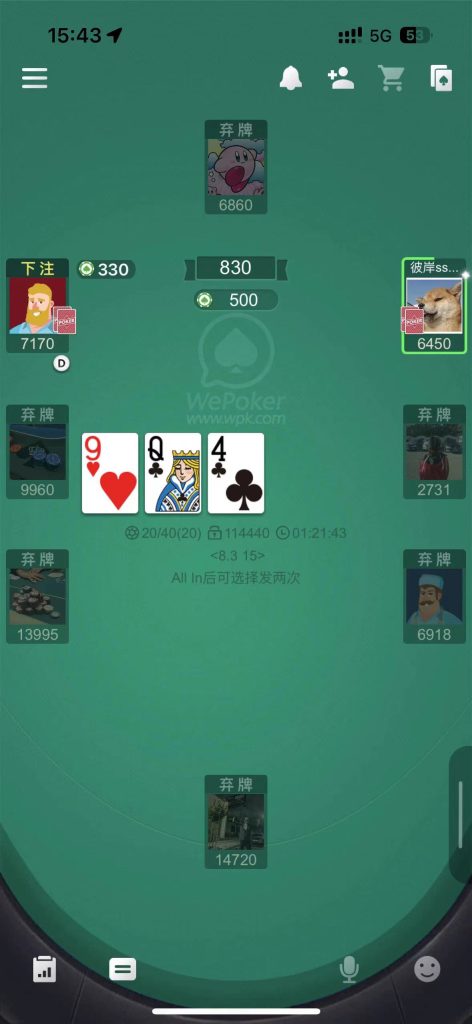
A poker game was organized with nine participants. Before the game began, four of the participants were given items or told statements that were meant to influence their perception of luck:
• Woyuan received a lucky charm.
• Jianing was given a lucky bracelet.
• Hongyu was handed a magic glasses
• Alice was informed through divination that she would experience good fortune that day.
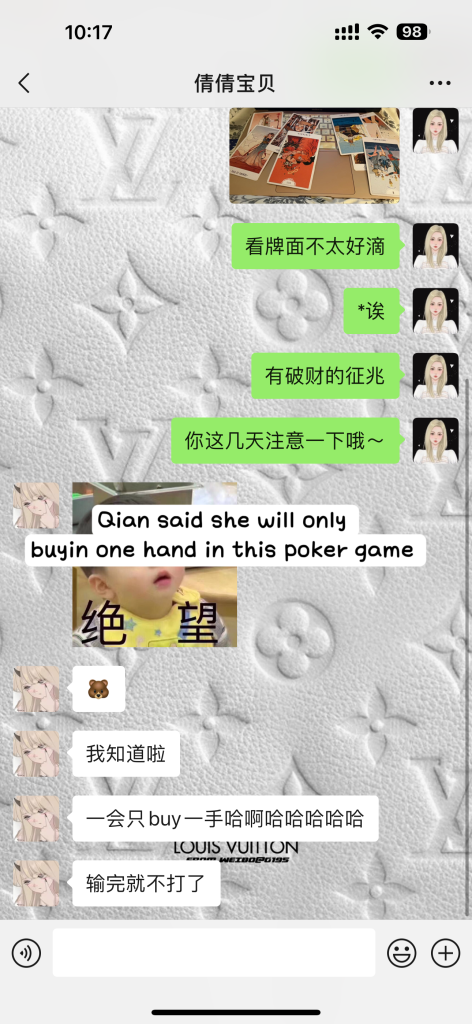
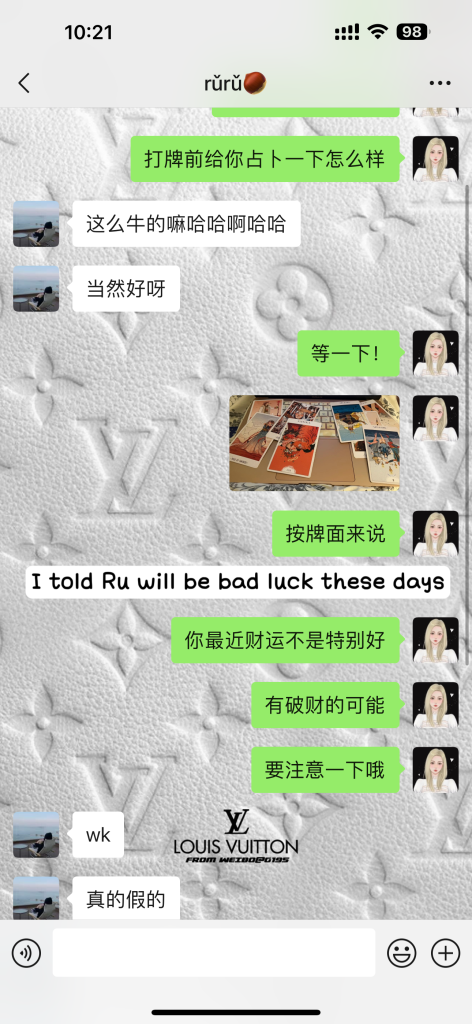
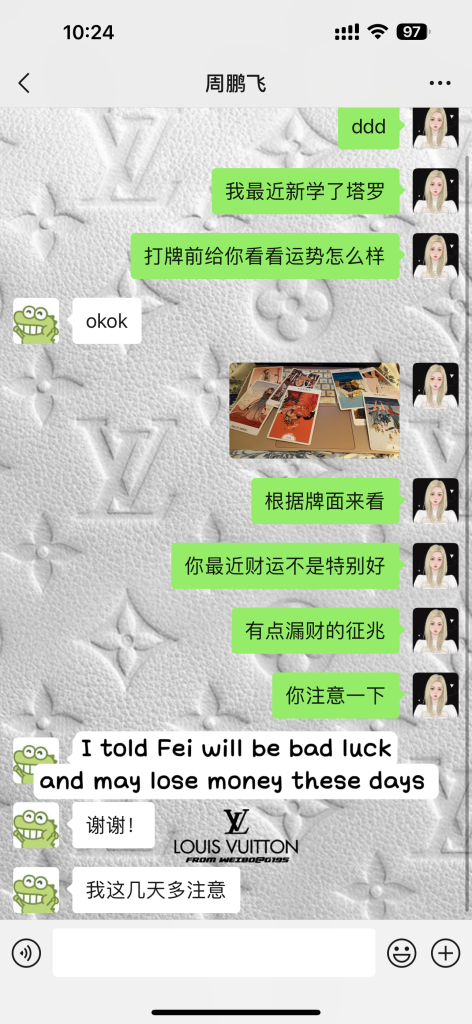
On the contrary, three participants were told through divination that they might face bad luck and could potentially lose money. The remaining two participants were not given any prior communication about luck.





Observations
Over the course of two hours, fascinating behavioral patterns emerged:
1. The “Lucky” Group: Those who were given items or told they were lucky (Woyuan, Alice, and Jianing) exhibited more aggressive play. They were more likely to believe in luck, trust the outs will come and follow the river. and even place higher bets.
2. The “Unlucky” Group: The participants who were informed of potential bad luck were notably more cautious. They bought in less than usual and hesitated more when deciding to bet.
3. The Neutral Group: Hongyu, despite his magic glasses, and the other two participants who weren’t communicated any luck-related information, showed no significant change in their behavior.